

Rhexoxylon Fossilised petrified Wood
£155.00
1 in stock
Description
Rhexoxylon fossilised petrified wood
This rare Rhexoxylon fossilised petrified wood specimen is a beautifully preserved slice of Triassic-era plant material, weighing 2.066 kilos and measuring approximately 20cm wide x 18cm high x 5cm deep. Rhexoxylon is a genus of fossilized seed fern (corystosperm) wood from the Upper Triassic period, around 200 million years old, often found in regions like Zimbabwe (Gokwe) or Madagascar. The petrified wood has undergone mineralization, replacing the original organic structure with silica-rich agate or chalcedony, resulting in a durable, polished piece with subtle colour variations and patterns.
The specimen showcases the characteristic woody texture and growth rings of Rhexoxylon, with potential green hues from chromium impurities or grey/orange/pink shades typical of these fossils. It’s an excellent example for display, highlighting the natural history of ancient seed ferns that once grew in vine-like forms with woody trunks.
You will receive the exact Rhexoxylon fossilised petrified wood shown in the product photos.
Watch this short video for more details… Rhexoxylon
Key Features & Specifications
• Material: Fossilized petrified wood (Rhexoxylon genus, seed fern)
• Age/Period: Upper Triassic, approximately 200 million years old
• Origin: Madagascar
• Weight: 2.066 kg
• Dimensions: Approx. 20cm W x 18cm H x 5cm D
• Finish: Polished on one side for smooth texture and enhanced detail
• Uniqueness: Natural preservation of woody structure, growth rings, and colour variations—photos represent the actual item
Ideal for fossil collectors, as a educational display piece, or to add a touch of ancient natural history to your home or office decor. The substantial size and historical significance make it a conversation starter.
Care Tips
• Dust gently with a soft, dry cloth to maintain shine.
• Avoid water, harsh cleaners, or acids (petrified wood is durable but can be affected by moisture over time).
• Store in a dry environment away from direct sunlight to preserve colours.
• Handle carefully due to weight—display on a stable surface.
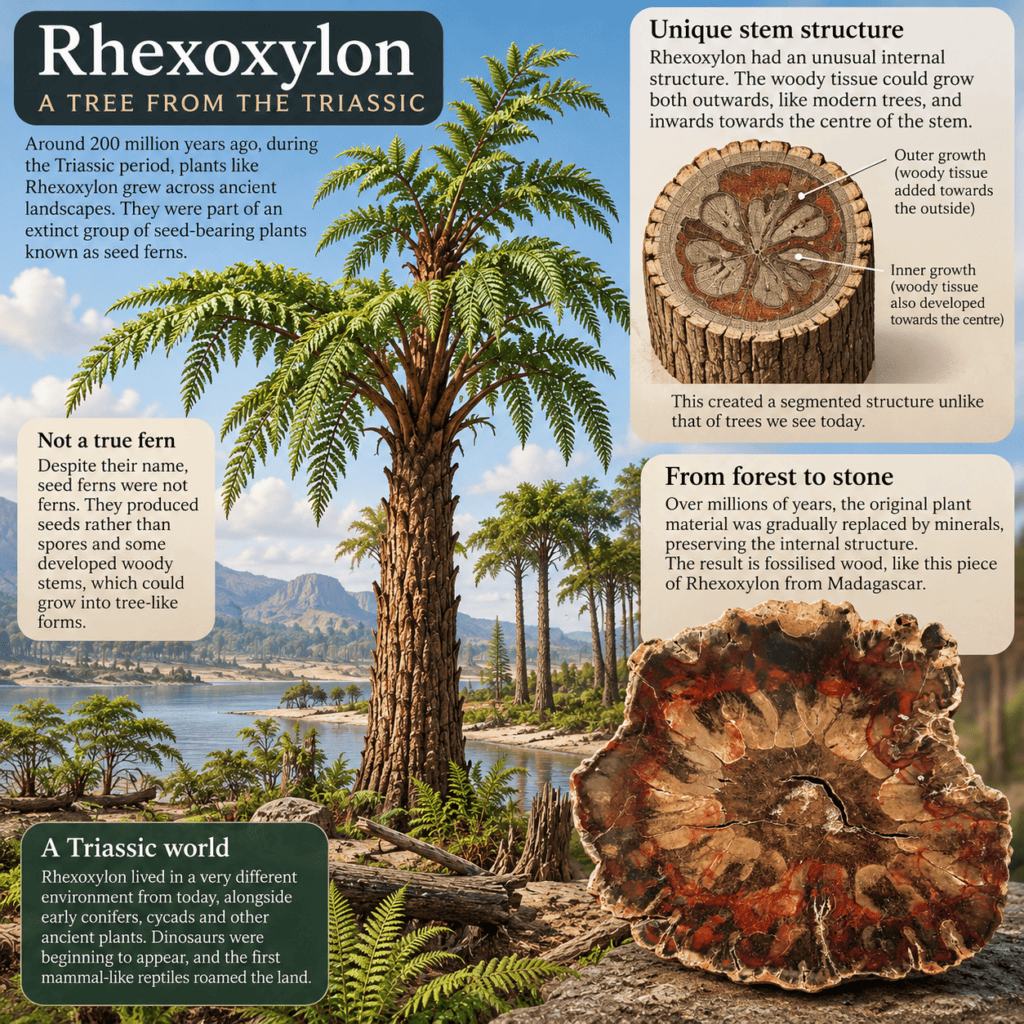
The illustration is useful for imagining what the plant might have looked like, but its appearance is a reconstruction, not something we can establish with certainty.
Related products
-
Prehnite with Epidote Dragon
£777.00 Add to basket -
Uruguayan Amethyst on stand Large
£630.00 Add to basket -
Moss Agate Tower
Price range: £1,500.00 through £3,000.00 Select options This product has multiple variants. The options may be chosen on the product page -

Larimar Crystal Skull
£927.00 Add to basket
Reviews
There are no reviews yet.